Festival & Sadya
The South Indian Thali Explained, Bowl by Bowl
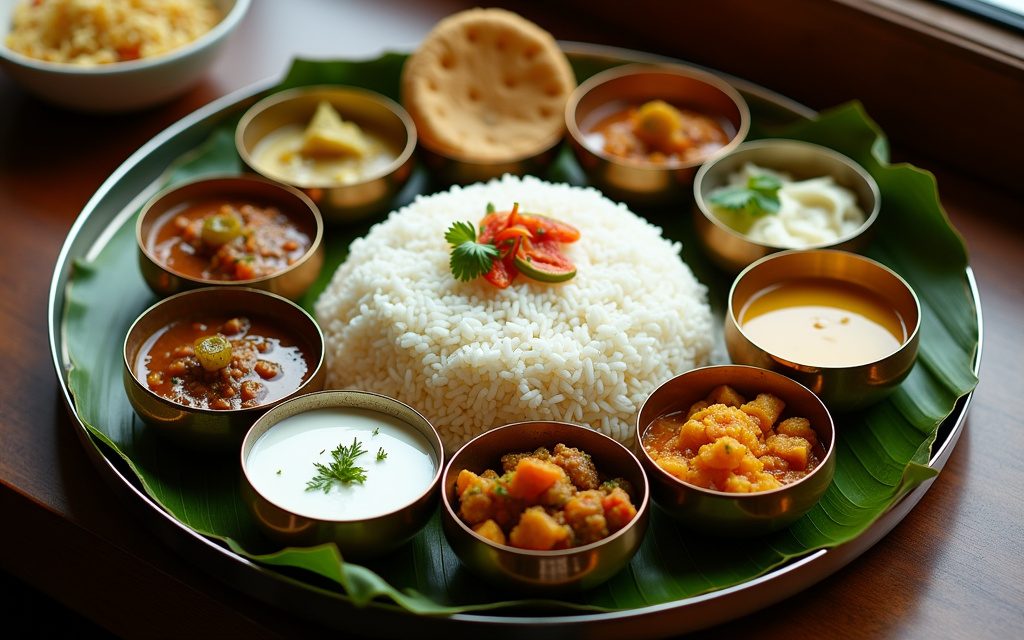
Why rice arrives in stages, what each small bowl is doing there, and the sequence the meal is designed around, which almost nobody explains to newcomers.

What goes on the leaf, where it goes, in what order it is served, and how to cook twenty-odd dishes across two days without losing your mind.
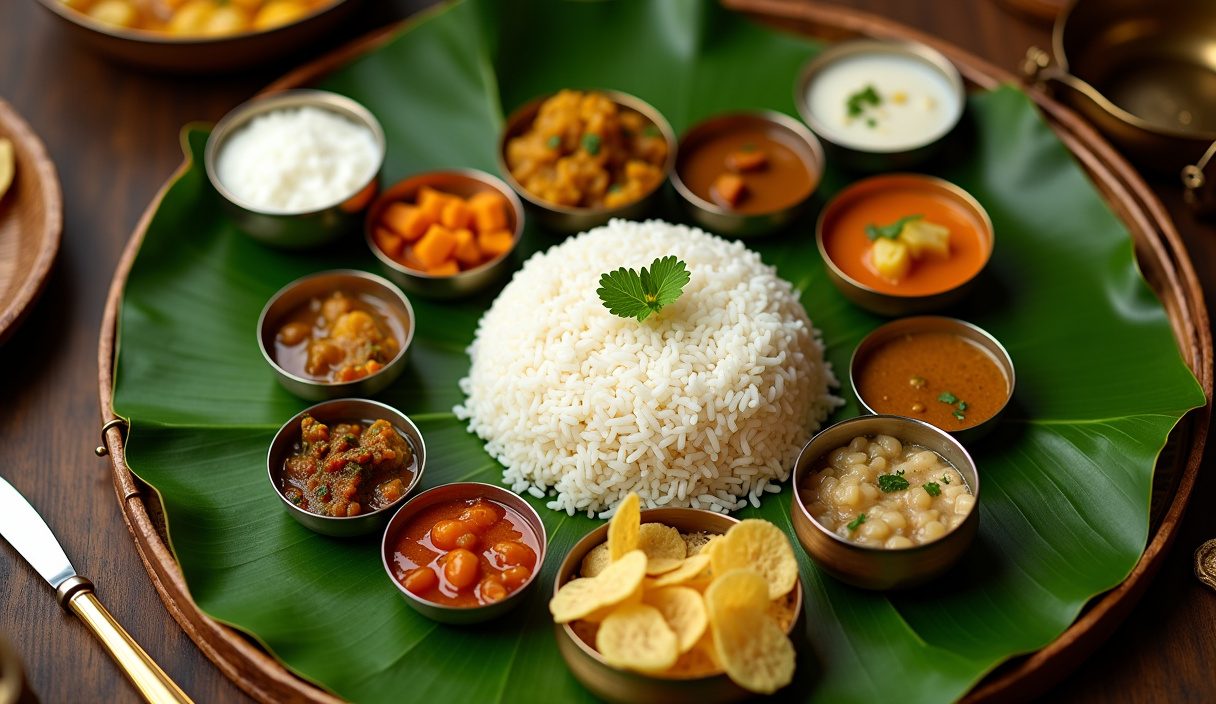
A sadya is a vegetarian feast served on a banana leaf, and the one served at Onam is the most elaborate version of it. Depending on the household it runs to anywhere from a modest eleven dishes to a genuinely intimidating twenty-six. It is eaten with the hands, seated, in a particular order, and the order is not arbitrary.
What follows is the sadya as I learned it in Kottayam. Other districts and communities do it differently, and those differences are real and worth respecting rather than smoothing over. Where a dish is regional or optional, I have said so.
The leaf is placed with the narrow end pointing left of the person eating, and the darker glossy side facing up. This is consistent almost everywhere and getting it backwards is the first thing anyone will notice.
The geography of the leaf follows a logic: small, intense things at the top, substantial things at the bottom, rice in the middle.
Parippu — a plain cooked moong dal with ghee, the first thing poured over the rice. Simple by design; it opens the meal gently.
Sambar — the Kerala version, often with a roasted coconut base. See our sambar guide for the Tamil version and the notes on how the Kerala one differs.
Avial — the signature sadya dish. Mixed vegetables cut into batons, cooked until just tender, bound with a coarse paste of coconut, green chilli and cumin, and finished with raw coconut oil and curry leaves. The coconut oil at the end is not optional; it is what makes avial taste like avial.
Olan — ash gourd and cowpeas in thin coconut milk, barely spiced, finished with coconut oil. Deliberately mild, a rest between stronger dishes.
Kaalan — yam or raw banana in a thick, sour curd-and-coconut gravy, heavily peppered. Keeps for days.
Erissery — pumpkin and beans with coconut, topped with coconut roasted dark in coconut oil.
Thoran — a dry stir-fry of a finely chopped vegetable with grated coconut, mustard seeds and curry leaves. Cabbage, beans or raw banana are common.
Mezhukkupuratti — vegetables sautéed simply in coconut oil with turmeric and pepper. No coconut.
Pachadi and kichadi — curd-based sides. Pachadi is sweeter, often with pineapple or ripe mango; kichadi is savoury and tangy, usually cucumber or beetroot.
Puli inji — a dense, dark ginger-tamarind-jaggery relish, sweet, sour and hot at once. A tiny quantity goes a long way and it is one of the great things on the leaf.
Rasam — served late, over a second, smaller serving of rice. See the rasam guide, and remember the rule about not boiling it.
Pulissery or moru — a gentle curd curry, served near the end to settle the stomach.
Payasam — the closing sweet. Usually two: an ada pradhaman made with jaggery and coconut milk, and a milk-based semiya or palada payasam.
Dishes are not all put out at once. The sequence is part of the meal:
When you have finished, folding the leaf towards you signals that the meal was good. Folding it away is, in some households, a quiet complaint. It is worth knowing which way round it goes.
A sadya looks impossible until you see how much is made ahead. Here is how it actually gets done.
Up to two weeks before: pickles and puli inji. Both keep well and both improve with a few days.
The day before: banana chips and sharkara varatti (or buy them, as most people now do). Grate and freeze the coconut you will need. Cook the payasam — both kinds keep overnight and reheat well, though ada pradhaman thickens, so hold back some coconut milk. Chop the vegetables for avial and thoran and refrigerate in separate boxes. Make kaalan, which genuinely improves overnight.
Morning of: erissery and olan first, as both hold. Then thoran and mezhukkupuratti, which are quick. Then avial, which wants to be fresh. Then sambar. Then, last, rasam and parippu, which take minutes and must be hot.
Thirty minutes before serving: cook the rice. Fry the pappadam. Whisk the curd. Set out the leaves.
The principle is that anything coconut-heavy and dry keeps, anything thin and aromatic does not. Work backwards from rasam, which should be made last.
A respectable home sadya can be done with eleven: rice, parippu, sambar, rasam, avial, thoran, olan, pachadi, pickle, pappadam and one payasam. Nobody will feel short-changed. The twenty-six-dish version is a wedding and community-kitchen scale of thing.
Nearly. It is entirely vegetarian, and most dishes are coconut-based rather than dairy-based. The exceptions are the ghee poured over the parippu, the curd dishes (pachadi, kichadi, pulissery) and milk-based payasam. Swap those for coconut-milk versions and the whole meal is vegan without feeling diminished.
Frozen banana leaves, thawed and wiped, work fine and are widely available. Failing that, use a large plain plate and keep the same arrangement. The layout carries more meaning than the leaf itself.
Yes. It is traditionally eaten seated on the floor, but a table is fine. What is worth preserving is the serving order and the practice of serving rather than letting people help themselves, because the staged rice is what makes the sequence work.
The same structure, with local variation, appears at Vishu, at weddings, and at temple festivals across Kerala. Tamil Nadu's festival meals follow a related logic with a different dish list. For how the everyday and restaurant versions of this idea are put together, see our guide to the South Indian thali.
Why rice arrives in stages, what each small bowl is doing there, and the sequence the meal is designed around, which almost nobody explains to newcomers.
The rice to dal ratio, why fenugreek belongs in the soak, how long to ferment at your room temperature, and what to do when the batter refuses to rise.
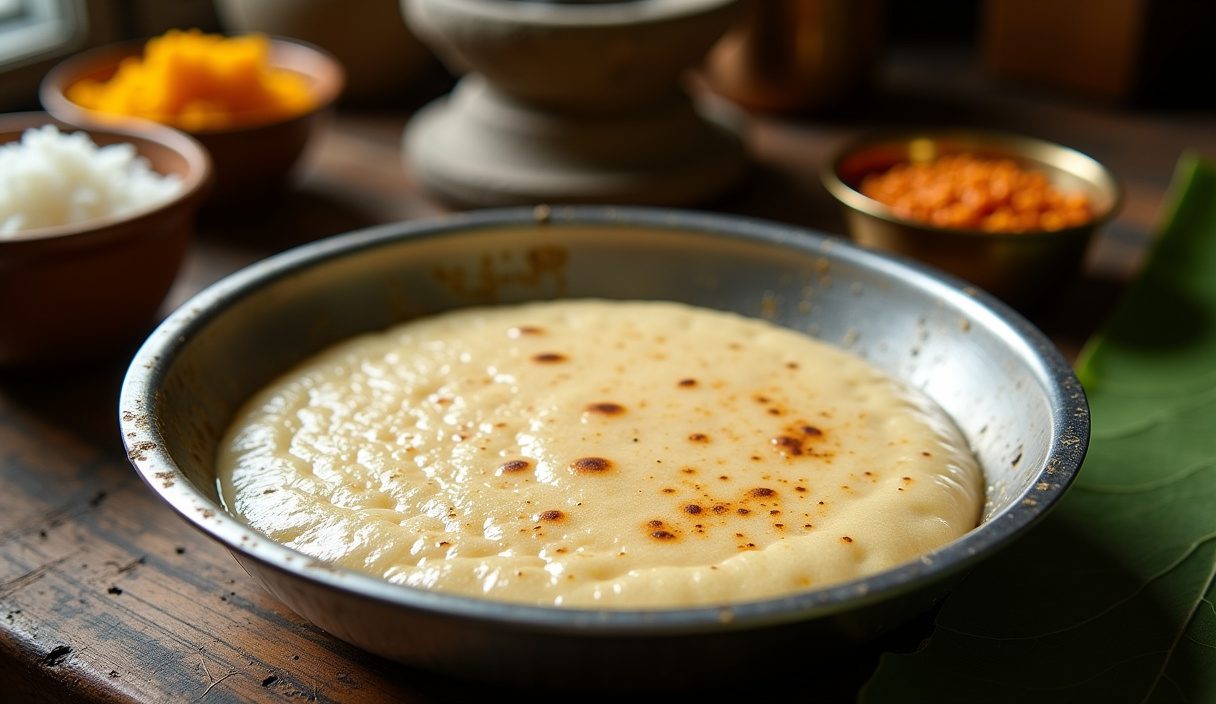
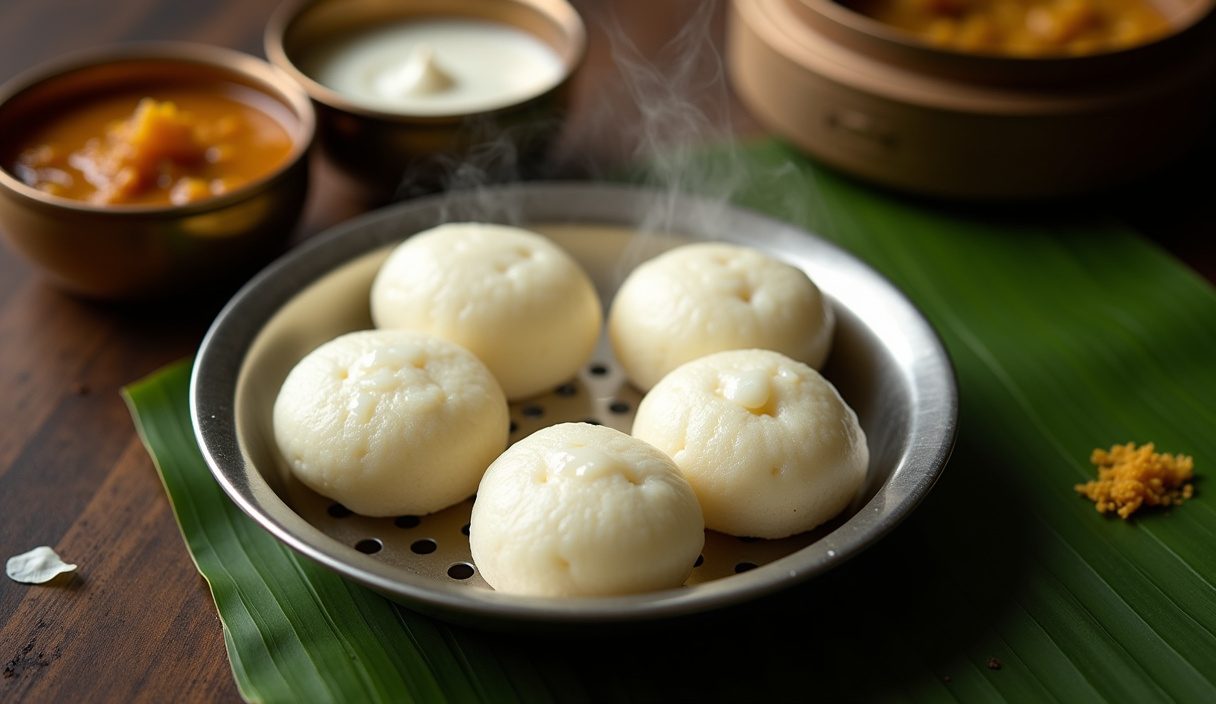
Why idli batter is ground differently from dosa batter, how long to steam, and the reasons idli comes out flat, dense, sticky or sour.