Breakfast & Tiffin
Dosa Batter Recipe: Ratios, Fermentation and Troubleshooting
The rice to dal ratio, why fenugreek belongs in the soak, how long to ferment at your room temperature, and what to do when the batter refuses to rise.

Why idli batter is ground differently from dosa batter, how long to steam, and the reasons idli comes out flat, dense, sticky or sour.
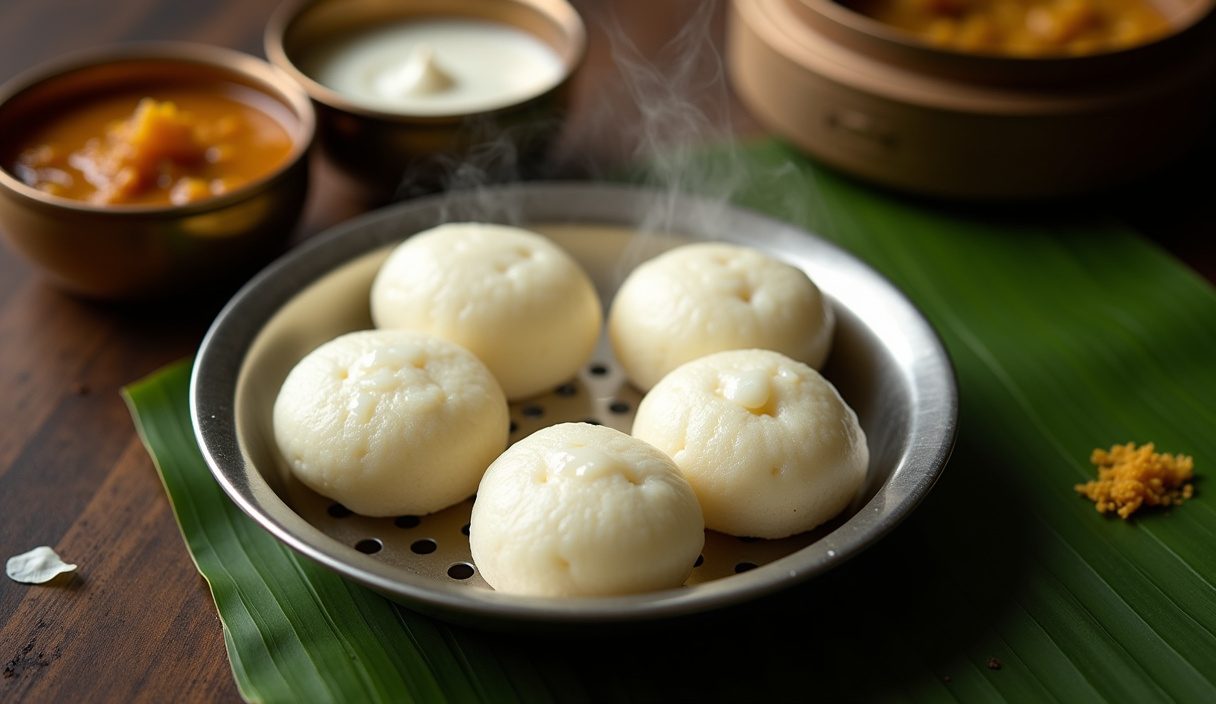
Idli is the most forgiving South Indian dish to eat and the least forgiving to make. A dosa that goes slightly wrong is still a dosa; it is thicker, or paler, but it works. An idli that goes wrong is a small, dense, faintly sour puck that nobody wants to finish. The margin is narrow, and almost all of it is decided at the grinder.
The good news is that the failures are specific and diagnosable. A flat idli is a different problem from a dense one, which is a different problem from a sticky one. This guide gives the method, then names each failure and its cause.
People often make one batter and use it for both. You can, and the result is a decent dosa and a mediocre idli. The two want different things.
A dosa batter wants to be smooth and pourable, because it has to spread thin. An idli batter wants to be coarse and thick, because it has to trap steam and hold its structure while it puffs. Grind the rice for idli to a texture like fine semolina — you should clearly feel grain between your fingers — and keep the batter thick enough that it drops off a spoon in a heavy blob rather than a ribbon.
That is 4:1 rice to dal, same as dosa, but everything downstream differs. The poha matters more here than it does for dosa: it holds water and gives the finished idli a softness that lasts past the first ten minutes out of the steamer.
Idli rice really is worth sourcing. Parboiled rice has been partially cooked in the husk, which changes its starch structure and lets it hold moisture in a way raw rice does not. Raw rice makes idli that is acceptable when hot and hard by the time it reaches the table.
Soak the rice separately from the dal and fenugreek, four to six hours. Add the poha to the rice for the last twenty minutes.
Grind the dal first, with its own soaking water, until it is white, smooth and genuinely fluffy. This is the same instruction as for dosa and it matters even more here, because the air you beat into the dal is the only leavening an idli gets. In a wet grinder, twenty minutes. In a mixer, several short batches with rests.
Grind the rice and poha together, coarse. Stop while you can still feel grain. If you grind rice smooth, the batter will not hold steam pockets and you will get a dense idli even if the fermentation was perfect.
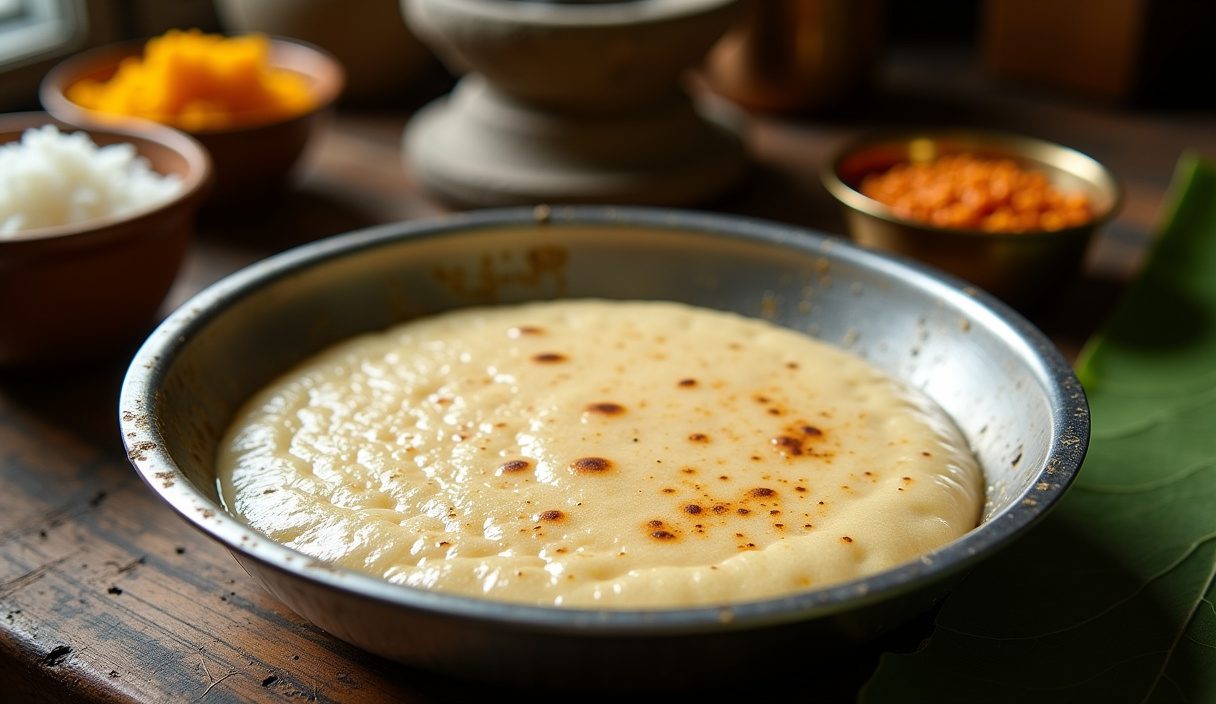
Mix the two by hand, add salt, and fold thoroughly. The batter should be thick: a spoonful should sit on the spoon and fall off reluctantly.
Same rules as dosa batter, driven by room temperature rather than the clock. Eight to twelve hours at 25 to 29°C; up to twenty-four in a cold kitchen with help from an oven light or a warm cupboard. Leave room in the vessel, because idli batter rises more vigorously than dosa batter.
The batter is ready when it has roughly doubled and the surface is domed and bubbly. Do not stir it aggressively at this point. For dosa you can knock the air out and it still works; for idli, that air is the whole point. Fold gently, once, just to even out the salt.
Grease the idli plates lightly with oil or ghee. Fill each mould about three-quarters full; they need room to rise. Bring the water in the steamer to a rolling boil before the plates go in, then lower them in, cover, and steam on medium-high.
Ten to twelve minutes is right for standard moulds. Test with a damp finger or a skewer at the centre of an idli: it should come out clean, and the surface should spring back when pressed. Over-steaming is a real failure mode and produces a rubbery, wet idli, so start checking at ten minutes.
Once done, take the plates out and let them stand for four or five minutes before unmoulding. Idli pulled out immediately tears and sticks. Use a wet spoon to lift them out, dipping the spoon each time.
The batter did not ferment enough, or you stirred the air out of it before steaming. Check that the batter had actually doubled and domed. If your kitchen is cold, give it longer, and next time use an oven with the light on. The other cause is under-ground dal: if the dal batter did not float in water, it never held enough air.
Almost always the rice was ground too fine. Idli needs that slightly gritty rice texture to trap steam. It can also happen if the batter was too thin — a runny batter spreads rather than puffs.
Either under-steamed, or the moulds were overfilled, or the batter was too watery. Steam a few minutes longer and fill the moulds only three-quarters. If the whole batch is wet, the batter needs thickening with a couple of tablespoons of rice flour and another short rest.
Over-fermented. In hot weather eight hours can be too many. Refrigerate the batter as soon as it has risen, and add salt before fermenting to slow it down. Slightly sour batter still makes good uttapam and paniyaram-style dishes, so it is not wasted.
You can, but expect a flatter, denser idli, because dosa batter is smoother and thinner. If that is all you have, thicken it with two or three tablespoons of fine rava or rice flour, let it sit for thirty minutes, then steam.
Idli is served hot, with coconut chutney and sambar, and often with a spoonful of idli podi mixed into sesame oil. Leftover idli is not a sad thing: cut it into cubes, temper with mustard seeds, curry leaves and chilli, and it becomes idli upma, which some people in my family prefer to the original.
If you have not made a fermented batter before, read the dosa batter guide first. It covers soaking, grinding and fermentation in more depth, and everything there applies here with the grind and thickness adjusted.
The rice to dal ratio, why fenugreek belongs in the soak, how long to ferment at your room temperature, and what to do when the batter refuses to rise.
No fermentation here, just a thick aerated urad dal batter, a wet palm and oil at the right temperature. The shaping is the part that takes practice.
The grind, the chicory question, how tightly to pack the filter, and the long pour between tumbler and davara that gives the coffee its foam.