Sambar & Sides
Sambar Recipe: Dal, Tamarind and the Order Vegetables Go In
Which dal, how much tamarind, whether to roast your own powder, and the order vegetables go into the pot so nothing turns to mush.

Recipes
Sambar and rasam recipes plus the chutneys and vegetable sides that complete a South Indian meal, with technique, spice ratios and troubleshooting.
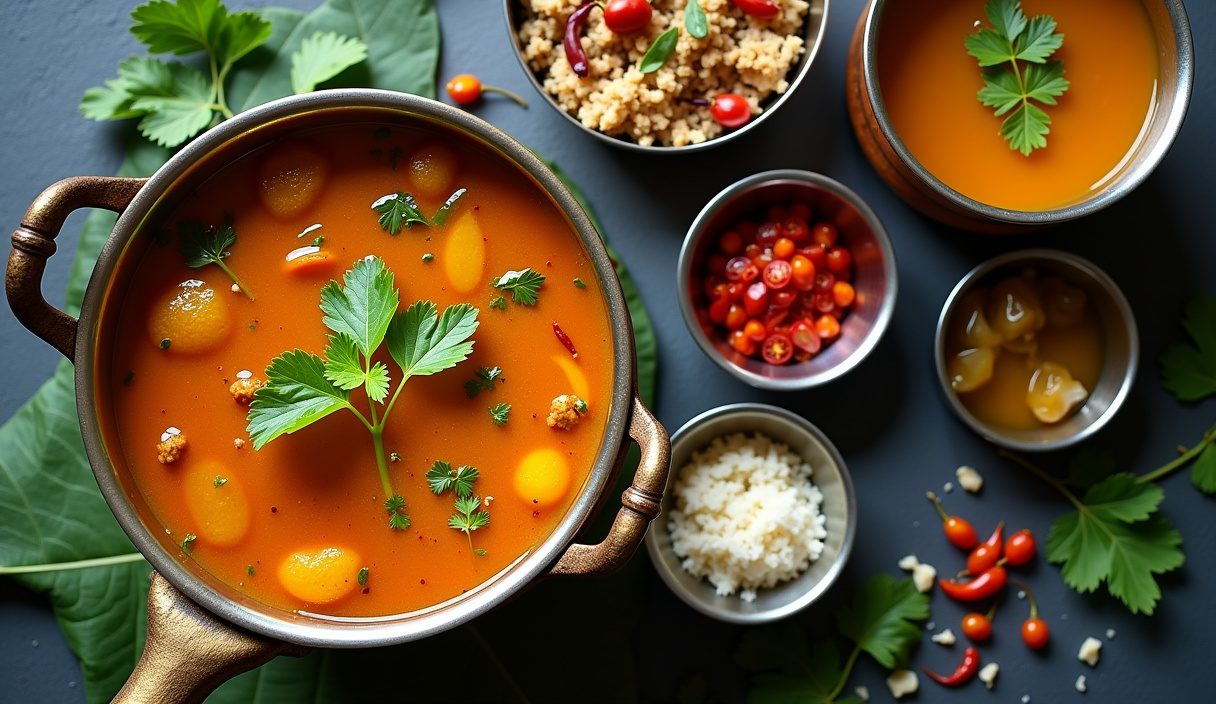
A South Indian plate is rarely a single dish. It is a set of small, complementary things: something thick and lentil-based, something thin and sharp, something cooling, something crisp. Sambar and rasam sit at the centre of that logic. Sambar is the substantial one, a tamarind-and-lentil stew thick with vegetables, spooned over rice or poured beside idli. Rasam is its opposite, thin enough to drink, sour and peppery, eaten towards the end of a meal to settle it.
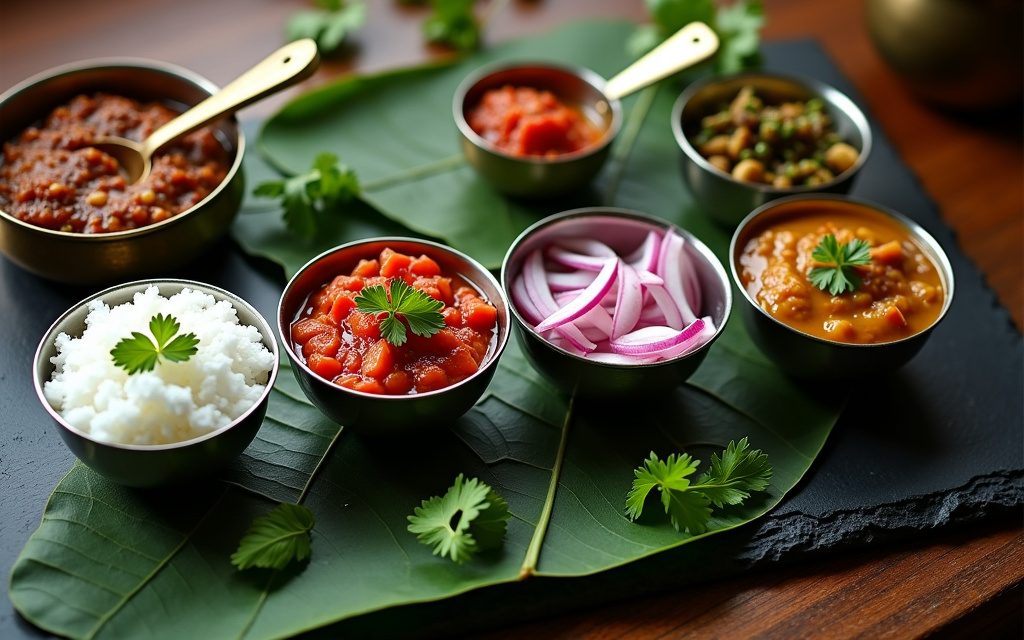
Chutneys do the cooling work. A coconut chutney beside a hot dosa is not a garnish; it is the thing that makes the plate balanced. And because chutney takes ten minutes while sambar takes forty, knowing three or four chutneys well is the most practical cooking skill in this whole cuisine.
The guides here concentrate on the handful of decisions that actually change the result. For sambar, that is which dal, how much tamarind, whether you use ready-made powder or roast and grind your own, and the order vegetables go into the pot so none of them collapse. For rasam, it is the single rule that trips up most cooks: rasam is never boiled hard. It is brought just to a froth and taken off, because boiling flattens the aroma you spent the whole recipe building.
The chutney guide covers the white coconut chutney most people mean by the word, plus the tomato, coriander, peanut and onion versions, and the tempering that finishes all of them.
There is no single correct sambar. Tamil sambar leans on a roasted spice blend and a generous hand with tamarind; Udupi sambar is sweeter and often uses coconut in the ground paste; Kerala varutharacha sambar builds its body from coconut roasted dark before grinding. We name the version we are giving rather than pretending one is the authentic one, and we note what changes if you want another.
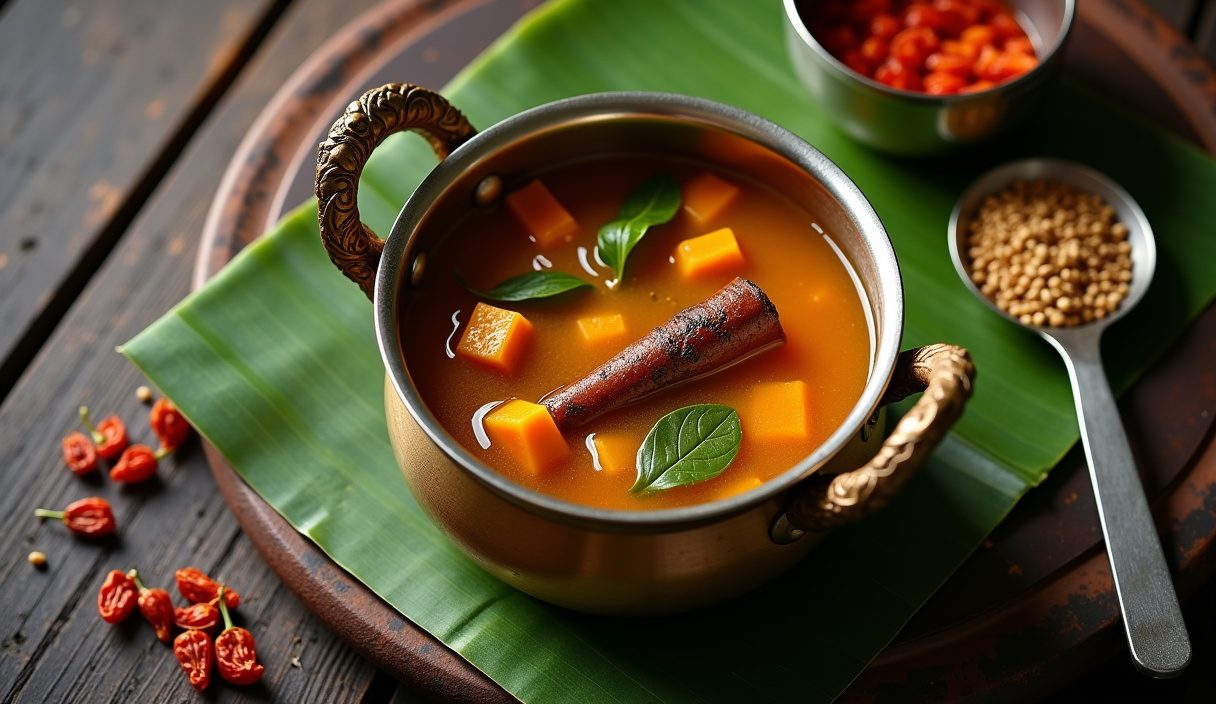
Which dal, how much tamarind, whether to roast your own powder, and the order vegetables go into the pot so nothing turns to mush.
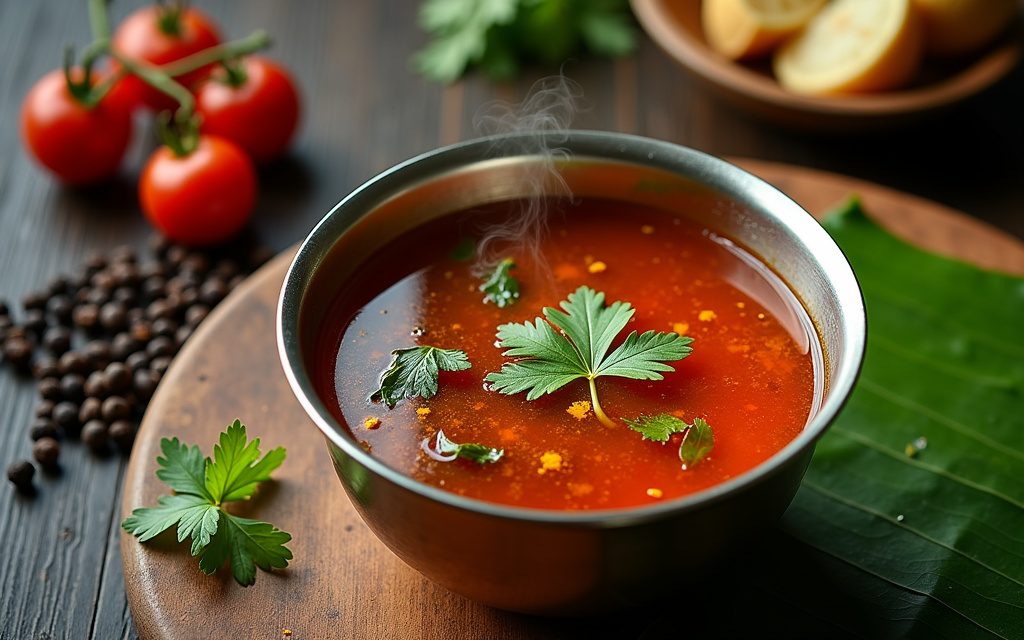
Rasam is thin, sour and peppery, and it is ruined by the thing most cooks do to it: boiling. Here is the froth rule and the versions worth knowing.
The white coconut chutney most people mean by the word, plus tomato, coriander, peanut and onion versions, and the tempering that finishes all of them.