Sambar & Sides
Sambar Recipe: Dal, Tamarind and the Order Vegetables Go In
Which dal, how much tamarind, whether to roast your own powder, and the order vegetables go into the pot so nothing turns to mush.

Rasam is thin, sour and peppery, and it is ruined by the thing most cooks do to it: boiling. Here is the froth rule and the versions worth knowing.
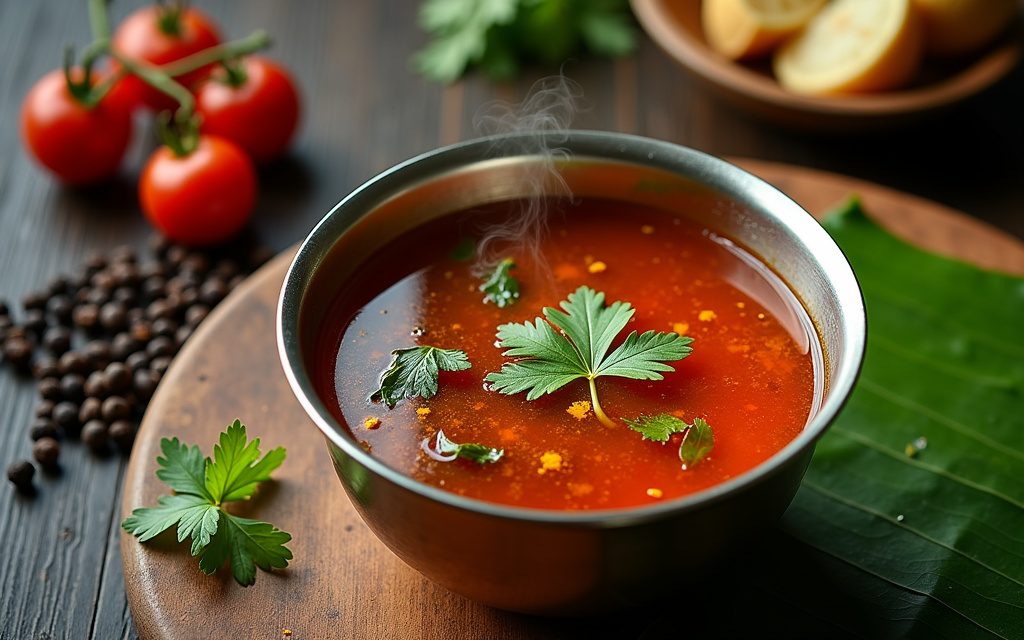
Rasam is the opposite of sambar in almost every respect. Sambar is thick, substantial, full of vegetables, and it improves overnight. Rasam is thin enough to drink from a tumbler, sharp with tamarind and pepper, and it is at its best within twenty minutes of being made. Where sambar is the middle of a meal, rasam is near the end, spooned over a small mound of rice to settle everything that came before.
There is one rule that matters more than every other instruction here, so I will put it at the top: rasam must never be boiled hard. You bring it to the point where a pale froth rises to the surface, and then you take it off the heat. That is it. Boiling past that point drives off the aromatics you just spent the recipe building, and leaves a dull, flat liquid that tastes of nothing but sour.
Rasam's flavour lives almost entirely in volatile compounds: the crushed pepper and cumin, the asafoetida, the curry leaves, the fresh coriander. These are exactly the compounds that evaporate first. A rolling boil for even two or three minutes strips most of them out.
Watch the surface instead of the clock. As the rasam approaches a simmer, a layer of pale foam gathers and the liquid begins to look cloudy and lively rather than still. The moment that froth covers the surface, turn the heat off. The residual heat finishes the job.
Rasam powder differs from sambar powder in being much heavier on pepper and cumin and much lighter on coriander. You can buy it, but a small quantity ground fresh for a single pot is dramatically better, and it takes five minutes.
Dry-roast until fragrant: 1 tablespoon coriander seeds, 1 teaspoon black peppercorns, 1 teaspoon cumin seeds, 2 dried red chillies, 1/4 teaspoon fenugreek. Cool, then grind coarse, not fine. A slightly coarse grind gives rasam its characteristic texture on the tongue.
Some households add two cloves of garlic crushed with the pepper. It is not universal, but it is very good.
Pepper rasam (milagu rasam) drops the tomato entirely and doubles the pepper and cumin. It is what gets made in South Indian households when somebody has a cold, and it is genuinely restorative — thin, hot and aromatic.
Tomato rasam goes the other way: more tomato, less tamarind, sometimes none at all, relying on the tomatoes for sourness. Milder and a good introduction if you find classic rasam too sharp.
Lemon rasam uses no tamarind. The dal and tomato base is cooked, then lemon juice is stirred in off the heat. Never add lemon to a pot still on the flame; it turns bitter.
Garlic rasam (poondu rasam) uses a dozen crushed cloves added at the tamarind stage. Pungent and excellent with plain rice.
You boiled it. This is by far the most common fault and it is not really recoverable — the aromatics are gone. You can partly rescue a pot by making a second, fresh tempering with plenty of curry leaves and asafoetida and adding more chopped coriander. Next time, watch for the froth.
Usually burnt fenugreek in the powder, or fenugreek added to the tempering and left too long. It can also come from lemon juice added while the pot was still on the heat. Roast fenugreek gently and only until it is a shade darker.
That is normal and not a fault. Rasam made with dal settles as it stands. Stir it before serving. If it bothers you, use less dal or mash it more thoroughly.
Gently, and only once, and stop well short of boiling. It is noticeably better fresh. Unlike sambar, which improves overnight, rasam loses something in the fridge.
In a traditional meal, rasam comes after sambar. A small amount of rice is served, rasam is poured over it, and it is eaten quickly while hot, often with a fried pappadam and a spoonful of vegetable poriyal on the side. Some people drink the last of it straight from a tumbler, which is the best argument for making it thin.
For the full sequence of a rice meal and where rasam sits in it, see our guide to the South Indian thali.
Which dal, how much tamarind, whether to roast your own powder, and the order vegetables go into the pot so nothing turns to mush.
The white coconut chutney most people mean by the word, plus tomato, coriander, peanut and onion versions, and the tempering that finishes all of them.
The rice to dal ratio, why fenugreek belongs in the soak, how long to ferment at your room temperature, and what to do when the batter refuses to rise.